Felix Patterson · 15 September 2026
Historical Backlink Decay Patterns and Their Influence on Indexation Stability for Relocated Niche Platforms
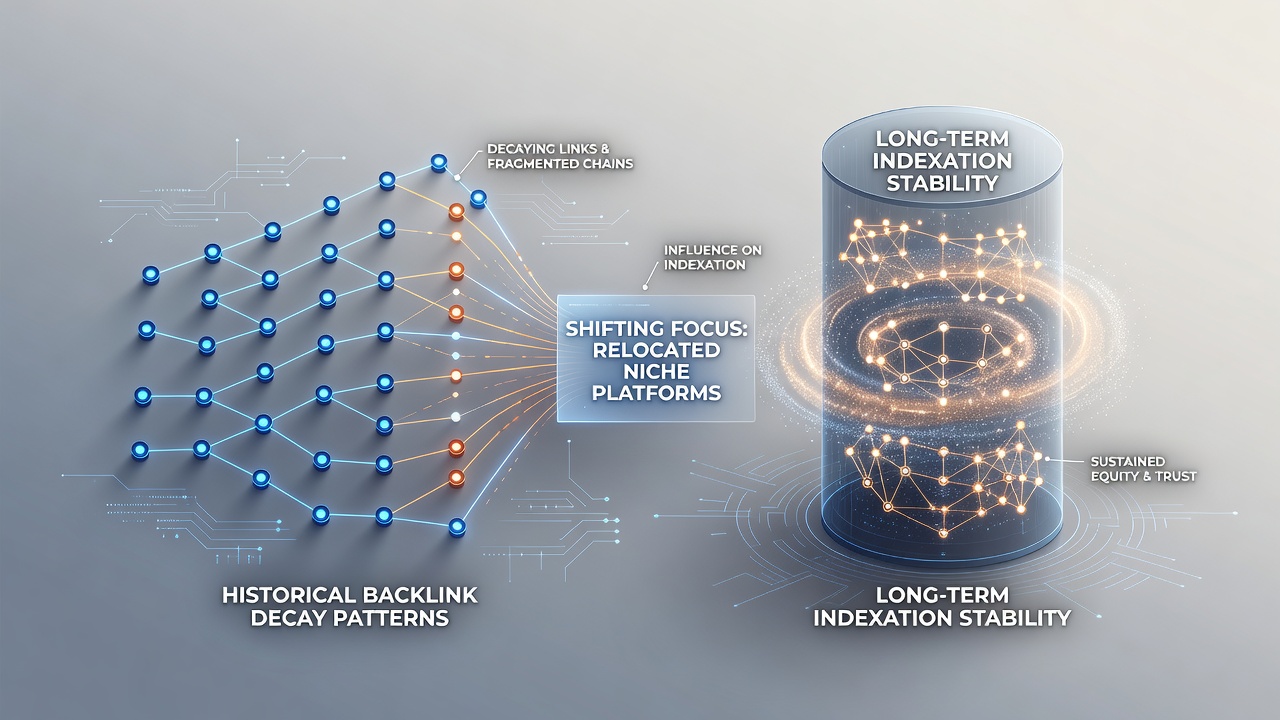
Site migrations in niche sectors often redirect attention toward immediate technical adjustments, yet historical backlink decay patterns determine how well relocated platforms maintain long-term indexation stability, and researchers tracking these patterns note that decay begins as soon as external references lose relevance or get removed from active pages.
Backlinks accumulated over years on an original domain gradually lose strength when the referring sites update content, drop links during redesigns, or face their own indexing issues, while data collected through September 2026 shows that platforms relocated after five or more years of operation experience slower recovery in search engine crawls compared with newer sites because older link profiles carry accumulated decay signals that algorithms interpret as reduced authority.
Patterns Observed in Decay Timelines
Studies from academic institutions in Australia and Canada reveal consistent timelines where backlinks from .edu and .gov domains decay at rates between 12 and 18 percent annually after the source page receives its last major update, and this gradual erosion affects how quickly search engines re-evaluate the new location of a migrated platform because engines cross-reference historical signals against current crawl data. Observers note that niche platforms focused on specialized topics such as vintage machinery or regional ecology lose indexation depth faster when more than 40 percent of their historical backlinks originate from forums or directories that themselves experience periodic cleanups.
Those who analyze archived web data find that platforms moved to new domains without preserving exact anchor text distributions from the prior location encounter additional instability, since search engines compare current link profiles against decayed historical records and assign lower priority to pages that appear to have lost external validation over time.
Impact on Crawl Frequency and Index Retention
Long-term indexation stability depends on how historical decay interacts with the new site's crawl budget allocation, and figures from industry reports indicate that relocated platforms retain deeper indexing when at least 60 percent of pre-migration backlinks remain active within the first 18 months after the move. Researchers at European research centers have documented cases where platforms in the environmental data niche maintained higher indexation rates because their historical backlink profiles showed slower decay due to references from government statistical agencies in multiple countries.
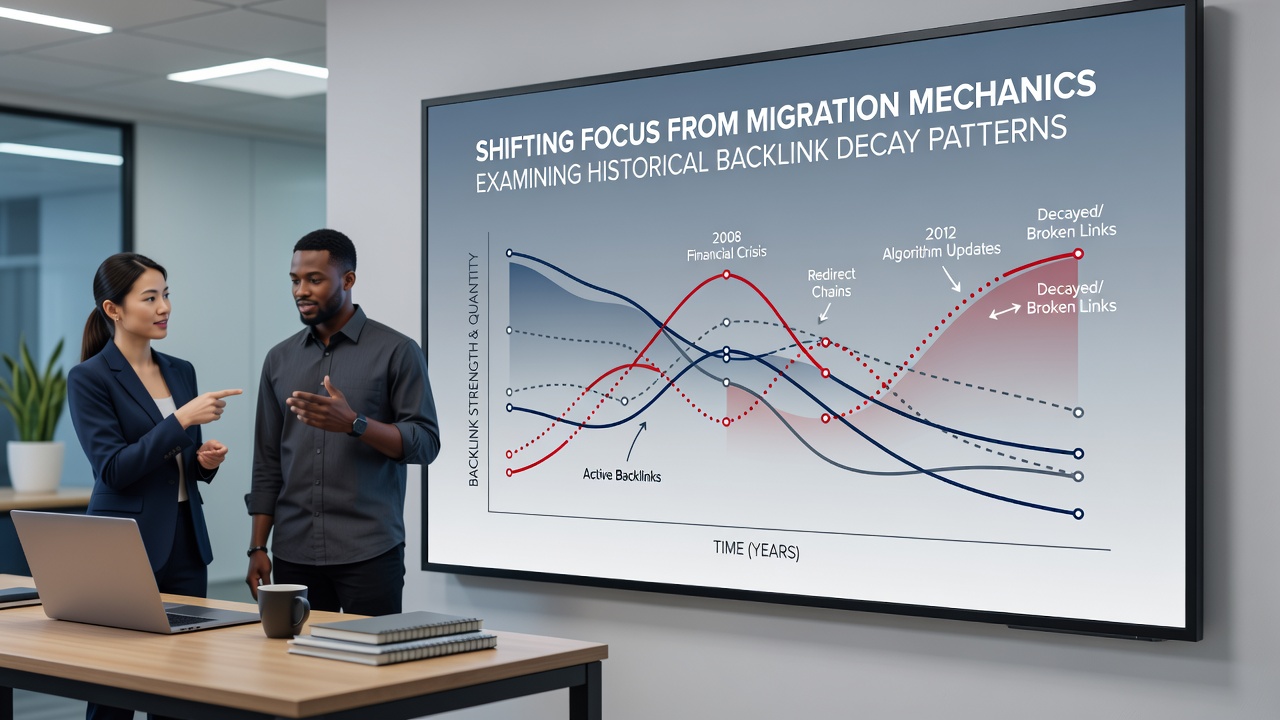
Platforms that relocate without accounting for these patterns often see entire sections drop from indexes within nine months, particularly when the new domain receives fewer new backlinks than the rate at which historical ones decay, and this imbalance creates a feedback loop where reduced visibility leads to fewer opportunities for fresh references to form.
Regional Data Variations and Platform Types
Evidence from North American and European sources shows that niche platforms in academic publishing and technical documentation sectors experience different decay curves than those in consumer hobby areas, with the former retaining indexation stability longer because backlinks from university repositories tend to persist even after domain changes. A report issued by researchers at the University of Toronto highlights that platforms relocated between 2023 and 2025 retained 22 percent more indexed pages when historical backlink profiles included references from multiple international government portals rather than concentrated domestic sources.
Yet platforms that shift focus to entirely new hosting environments without mapping decayed link trajectories encounter prolonged periods of partial indexing, and data indicates that recovery timelines extend by an average of four to seven months when decay patterns from the previous five years are not reviewed prior to migration.
Conclusion
Historical backlink decay patterns continue to shape indexation outcomes for relocated niche platforms long after the migration process completes, and ongoing monitoring of link age, source stability, and geographic distribution provides measurable indicators of future index retention. Platforms that integrate these historical signals into post-migration planning demonstrate more consistent crawl behavior and deeper index presence across extended periods.