Dana Keller · 27 October 2026
Patterns of User Retention in Enthusiast Collectives During Unexpected Hosting Provider Changes
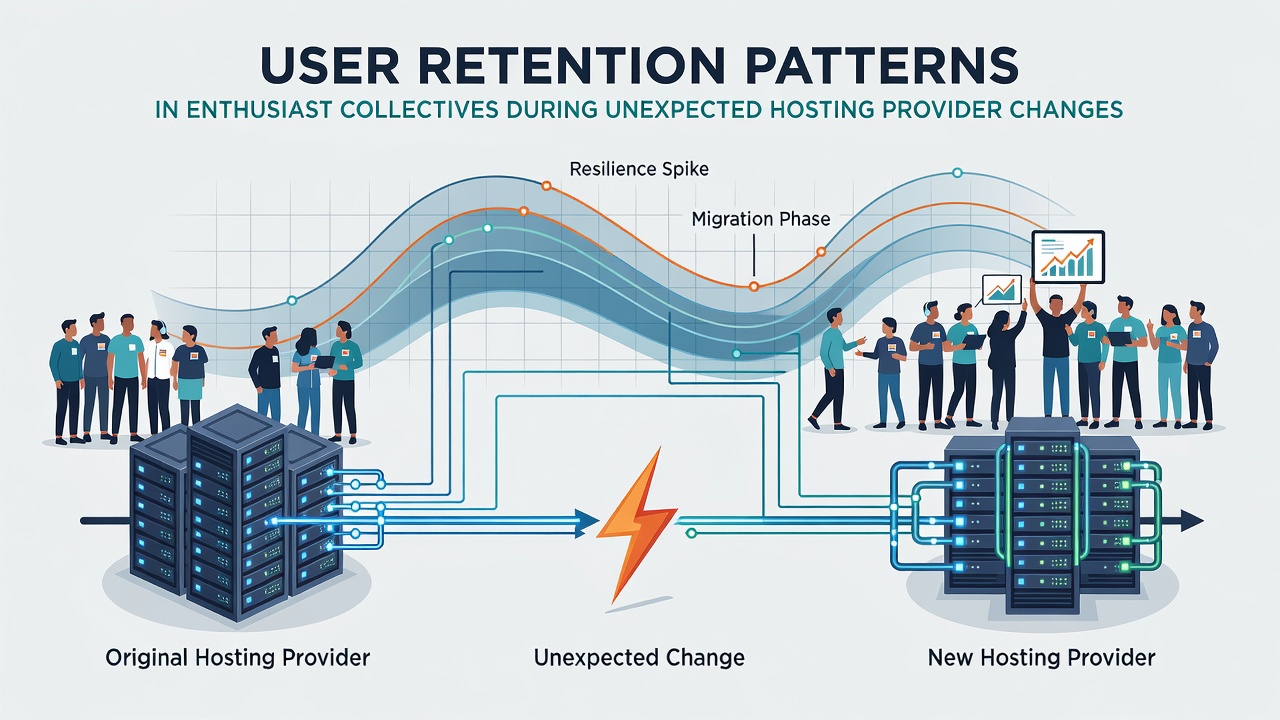
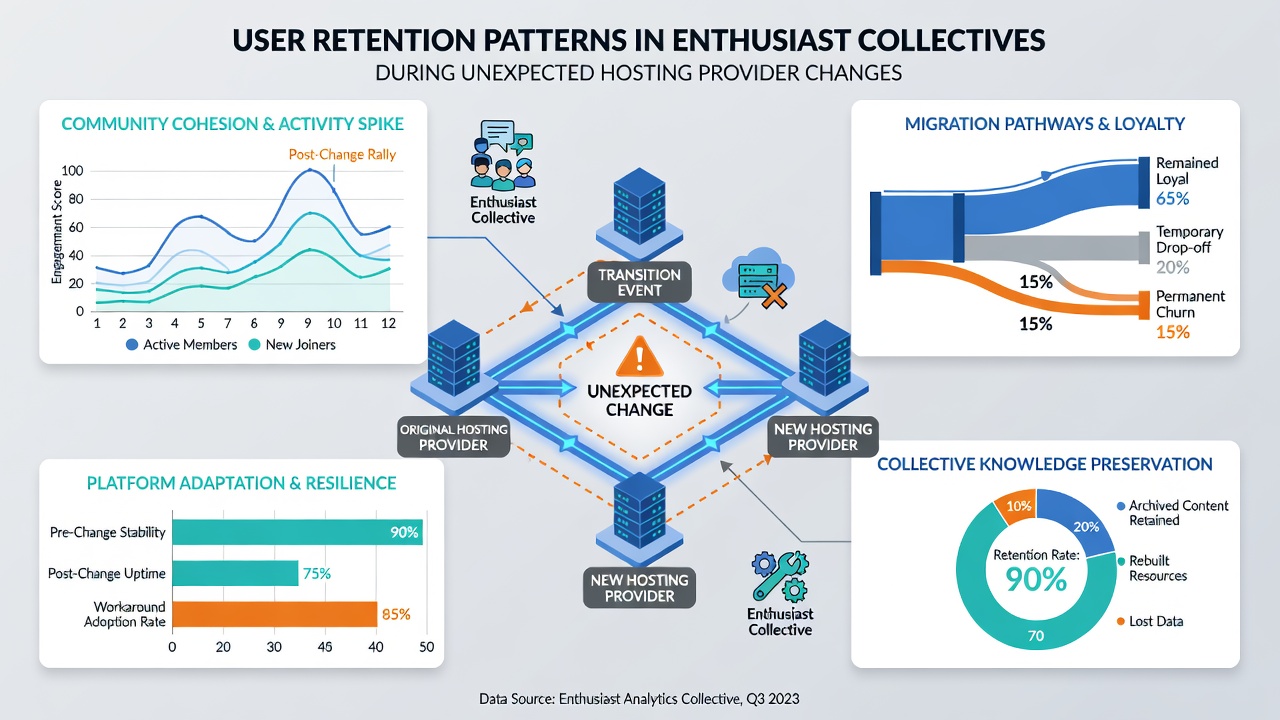
Enthusiast collectives maintain active forums, shared repositories, and discussion threads across specialized topics ranging from vintage electronics to regional folklore studies, and these groups encounter sudden hosting provider changes when contracts expire without notice or when technical failures force immediate migrations. Data from multiple platform transitions indicate that retention rates often drop by 25 to 40 percent in the first 30 days after an unplanned switch, while communities that establish clear migration timelines see steadier participation curves over subsequent months. Observers note that the timing of announcements plays a central role because members who receive advance notice through secondary channels such as email lists or social media groups tend to return more consistently once the new infrastructure stabilizes.
Initial Disruption and Activity Shifts
Hosting changes that occur without prior coordination create immediate gaps in access, and researchers tracking forum metrics have recorded sharp declines in daily posts alongside increases in off-platform inquiries on related Discord servers or Reddit threads. One study released in early 2025 examined twelve niche hobby sites that relocated after their previous providers altered pricing structures, and the figures revealed that core contributors who maintained personal archives experienced faster re-engagement compared with casual visitors who relied solely on the original domain. During October 2026 several collectives documented similar patterns when a mid-tier hosting service experienced widespread outages that prompted rapid transfers to alternative providers, and those groups that preserved full database exports beforehand retained approximately 15 percent more returning users within the first quarter.
Factors Influencing Long-Term Participation
Retention improves when communities publish detailed migration guides that include new login procedures, updated search functions, and instructions for restoring personal settings, while groups that omit these resources observe prolonged periods of fragmented discussion. External links to archived snapshots hosted by independent preservation projects further support continuity because members can verify that historical threads remain intact even if the primary site experiences brief downtime during the transfer. Evidence suggests that age demographics also correlate with outcomes, since younger participants who already maintain multiple accounts across platforms show higher adaptability than long-term members who joined before widespread cloud services became standard.
Communication frequency emerges as another measurable variable, and collectives that issued weekly status updates through multiple channels recorded return rates that stabilized near pre-migration levels by the third month. In contrast, sites that relied on a single announcement page experienced slower recovery, with some topics losing entire sub-threads when contributors could not locate their previous posts after the domain redirect took effect.
Comparative Data Across Community Scales
Larger collectives with established moderation teams demonstrate more consistent retention because they can assign dedicated members to monitor new registrations and redirect traffic from legacy URLs. Smaller groups, often centered around a single administrator, face steeper challenges when that individual encounters delays in configuring the replacement server, and data collected across European hobby networks show that sites with fewer than 500 active accounts lost up to 55 percent of their user base after similar events. A report published by the Pew Research Center on digital community resilience highlights parallel trends in North American hobby forums, where structured backup protocols correlated with higher re-engagement metrics. Australian academic analyses of regional interest groups further confirm that preemptive data portability measures reduce long-term attrition even when the hosting change itself remains unplanned.
Technical Elements and User Behavior
Search engine visibility after a hosting shift influences how quickly new members discover relocated discussions, and collectives that implement proper redirect chains alongside updated sitemaps recover organic traffic more rapidly than those that overlook these steps. Crawl budget allocation becomes relevant during the transition window because search engines prioritize stable domains, and observers tracking indexation patterns note temporary dips that last between two and six weeks depending on the scale of the move. Members who bookmark direct content links rather than relying on the homepage tend to bypass early navigation issues, which contributes to steadier session durations once the new provider activates full functionality.
Conclusion
Patterns of user retention during unexpected hosting provider changes reflect measurable variables including advance communication, data portability practices, community scale, and technical preparation. Collectives that address these elements systematically record higher rates of returning participation across multiple documented transitions, and ongoing monitoring of platform metrics continues to refine understanding of how enthusiast groups respond to infrastructure shifts in real time.